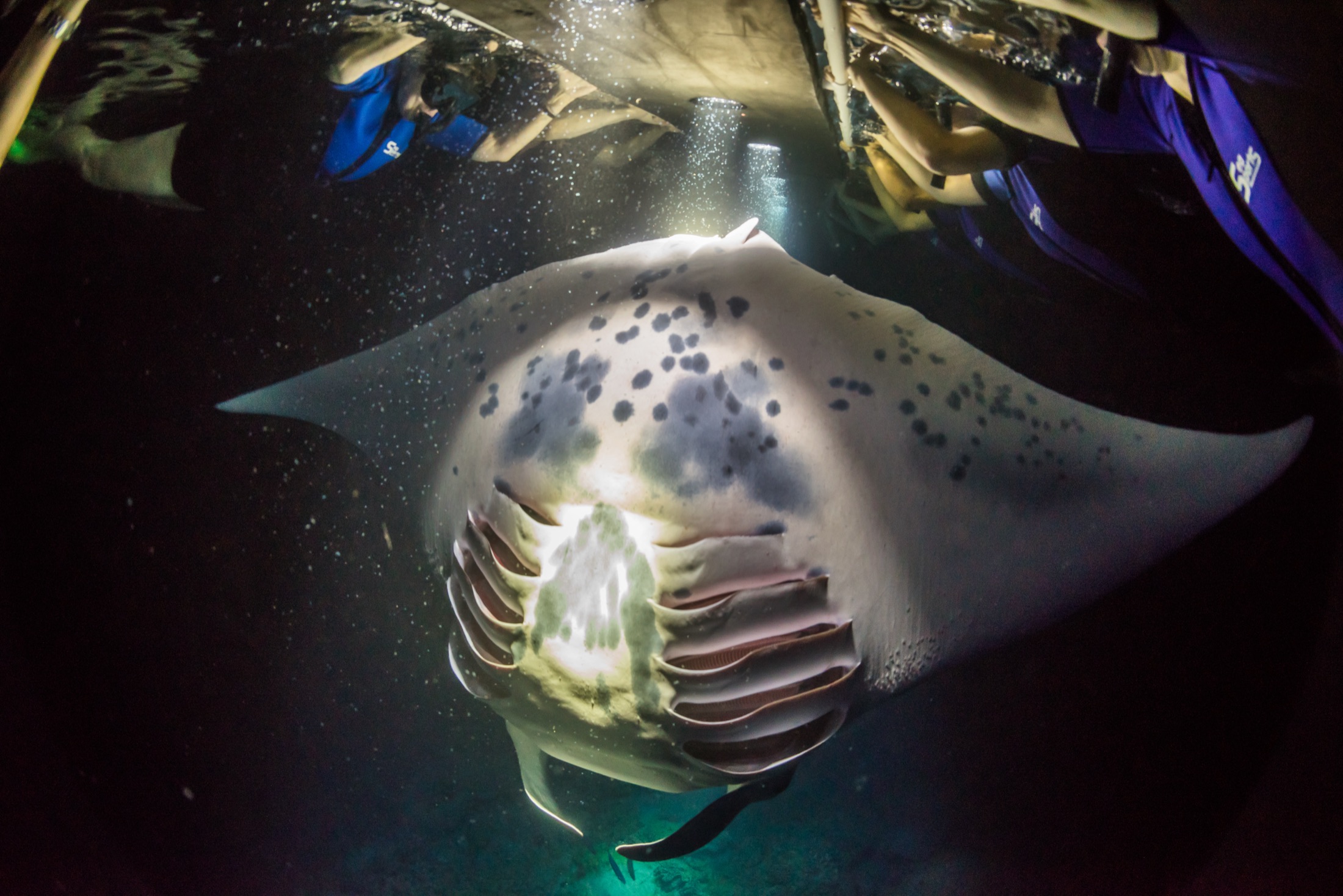
What you are actually paying for
$118 for an adult buys about ninety minutes end to end, of which roughly thirty are spent floating above wild manta rays. Put plainly: you are paying roughly the price of a nice dinner for two for half an hour with animals most people only see on television.
The comparison that matters is not against other snorkel trips. It is against the fact that this encounter is reliably available in only a handful of places on Earth, and Kona is the most dependable of them because the mantas here are residents rather than migrants.
It is worth it if
- You can swim and you are comfortable with your face in the water. Everything else about the tour is easy — you hold a lighted board and float — but that part is not optional.
- You want the encounter, not the photographs. People who come to look rather than to film almost never leave disappointed.
- You are travelling with older children. For a kid who is confident in the ocean, this tends to be the memory of the entire trip. See going with kids.
- You have more than one evening free. Book early in your stay so a cancelled or slow night can be repeated.
It is probably not worth it if
- You are a nervous or inexperienced swimmer. Open ocean at night is not where to find out. Guides stay with the group and flotation is provided, but nobody can breathe through a snorkel for you.
- You have back, neck or mobility problems, or cannot climb a boat ladder unassisted. The operator requires both, and guests must be under 275 lbs.
- You need certainty. These are wild animals. Most nights are extraordinary; some are quiet.
- It is your last night on the island. No flexibility left if the ocean says no.
What can disappoint, honestly
A slow night. Manta counts at the site range from zero to around forty, averaging roughly ten. Zero is rare but real, which is why the tour carries a sightings guarantee — if the mantas do not appear, you can ride again. That is a genuine protection, though it is only useful if you still have nights left on the island.
Crowding at sunset. The first departures of the evening are the busiest, with several boats and many lights on the water at once. Later slots are quieter and statistically better, which is why we run them. More on picking a departure.
Cold on the way back. Kona water is 75–81°F and a wetsuit handles the float, but the ride back is wet and windy. People who skip the towel and dry layer remember that part more than they would like.
Delays. Tours run late for ordinary reasons — weather, harbour traffic, wildlife worth staying for. An hour is uncommon but possible, and there are no refunds for it. Keep the evening open.
Will the photos be any good?
Set your expectations here. Phone footage through a waterproof case at night is usually disappointing; the light is low and the animals are moving. A GoPro-class camera does much better, and the crew rents them at check-in for $60 if you did not bring one. But the honest advice from most guests is to spend the first few minutes watching rather than filming — the experience does not survive being viewed entirely through a screen.
The comparison people actually want
Against other Kona activities: the reef snorkelling at Kealakekua Bay is beautiful and much cheaper in effort, the sunset sails are pleasant, the volcano is extraordinary but a long drive. None of them is strange in the way this is. Floating in black water while an animal with a twelve-foot wingspan somersaults open-mouthed under your mask is not a scenic activity. It is closer to meeting something.
That is the honest case for it, and the reason the answer is yes for most people who can swim.
Before you decide
Check how safe it actually is, read what the ticket covers, or see how to compare operators.