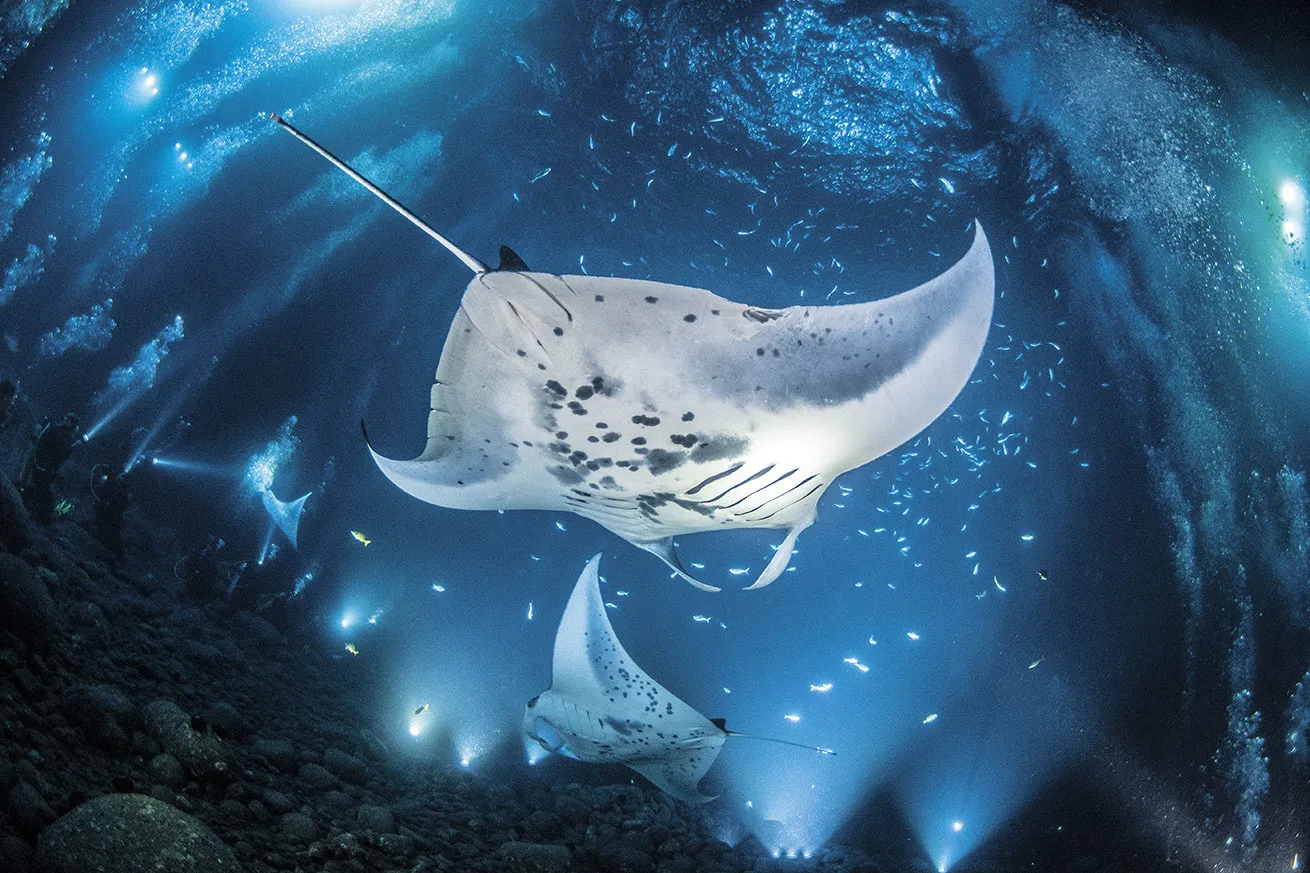
Gentle giants, no sting
Kona’s mantas are reef manta rays (Mobula alfredi), the second-largest ray species in the world. Adults here commonly span 10 to 14 feet wingtip to wingtip.
Unlike stingrays, manta rays have no barb, no stinger, and no teeth that can bite. They are filter feeders: they eat plankton — tiny drifting animals — by swimming open-mouthed through dense patches of it and straining the water through their gill plates. A manta gliding a few inches beneath you is looking for plankton, not for you.
A resident population with names
The mantas of the Kona coast don’t migrate through — they live here. Researchers and dive operators have identified hundreds of individual mantas along this coastline over several decades, each recognized by the unique pattern of spots on its belly, like a fingerprint. Many carry names given by the local ocean community, and crews recognize regulars on sight.
Because the population is resident and the feeding sites are consistent, Kona offers something almost nowhere else does: a manta encounter you can plan a vacation around.
Why they gather at Keauhou Bay
The story starts with light. Decades ago, bright lights shining from a hotel onto the water off Keauhou attracted plankton after dark — and the plankton attracted mantas. The nightly gathering that grew from it is now known as Manta Village, one of the most dependable manta viewing sites in the world, and it sits just offshore from our check-in by the Outrigger Resort.
That’s why our boat ride is three minutes. Tour operators continue the tradition with powerful dive lights: the lights concentrate the plankton, and the mantas come in to feed. More on how the night snorkel works.
Barrel rolls: how a manta eats
When a manta finds a thick patch of plankton, it doesn’t swim through once — it loops. The manta somersaults backward through the patch again and again, mouth wide, in what’s called a barrel roll. In the beam of a dive light, this happens right at the surface, sometimes close enough that snorkelers feel the push of water from a passing wing.
Respectful viewing
Mantas are protected in Hawaii, and the local viewing standards keep the encounter safe for them and for you:
- Look, don’t touch — a manta’s skin has a protective mucus coating that hands can damage
- Float flat and still on the surface; let the mantas come to you
- No diving down into the feeding zone
- Keep fins at the surface and away from the animals
Our crew briefs every guest before entering the water, and guides stay with the group the whole time. First-time snorkelers are welcome — flotation is provided and you never need to leave the surface.
See them tonight
Mantas feed off Kona year-round — there’s no season to wait for. Read when to go, check the FAQ, or book the Moonlight Manta Snorkel.