The rules
The minimum age is five. Children's tickets ($99, versus $118 for 13 and up) cover guests twelve and under. Every guest in the water must be able to snorkel independently while holding the board.
That last part is the real gate. A guide is beside the group the whole time, and the flotation belt keeps everyone flat on the surface without effort — but nobody can breathe through a snorkel on a child's behalf.
Is your kid ready?
Age is a poor predictor. Some eight-year-olds are completely at home; some fourteen-year-olds panic the moment the light hits open water. Ask yourself honestly:
- Have they snorkeled before, in the ocean rather than a pool?
- Will they put their face in the water and keep it there for minutes at a time?
- Are they comfortable not touching the bottom?
- How do they handle the dark?
- Can they follow an instruction from a stranger, immediately, the first time?
If most of those are a yes, they will probably love it. If several are a no, read the next section rather than hoping for the best.
Try a practice run first
The single best thing you can do is take them snorkeling in daylight earlier in the trip. Kahaluʻu Beach Park is shallow, protected, full of fish and gear rental sits across the road. An hour there tells you more than any amount of deliberating, and a child who has already had a good day on a reef steps into the night tour with a reference point instead of a blank.
If a child doesn't want to get in
That's fine, and it happens. Non-snorkelers can stay aboard with a parent and watch the lights and the mantas from the boat, which is genuinely good viewing — the animals are lit from above and below and frequently visible from the deck.
Plan for it rather than discovering it at the ladder. Decide in advance which adult stays aboard if it comes to that, so nobody is negotiating in the dark.
Practical notes for parents
- Wetsuits matter more for kids. Small bodies lose heat faster; request one at check-in.
- Life jackets are available and don't stop anyone seeing the show — you're on the surface anyway.
- Feed them first. No food is served and tours sometimes run late.
- Take the earlier departure if bedtime is a factor. Later boats see quieter water, but the early tours still see mantas and get you back sooner.
- Prescription masks aren't available — rent one in town if your child needs glasses. See what to bring.
- Everyone needs a waiver, signed by a parent or guardian for minors. Mandatory for every tour company in Hawaii.
Why kids tend to love it
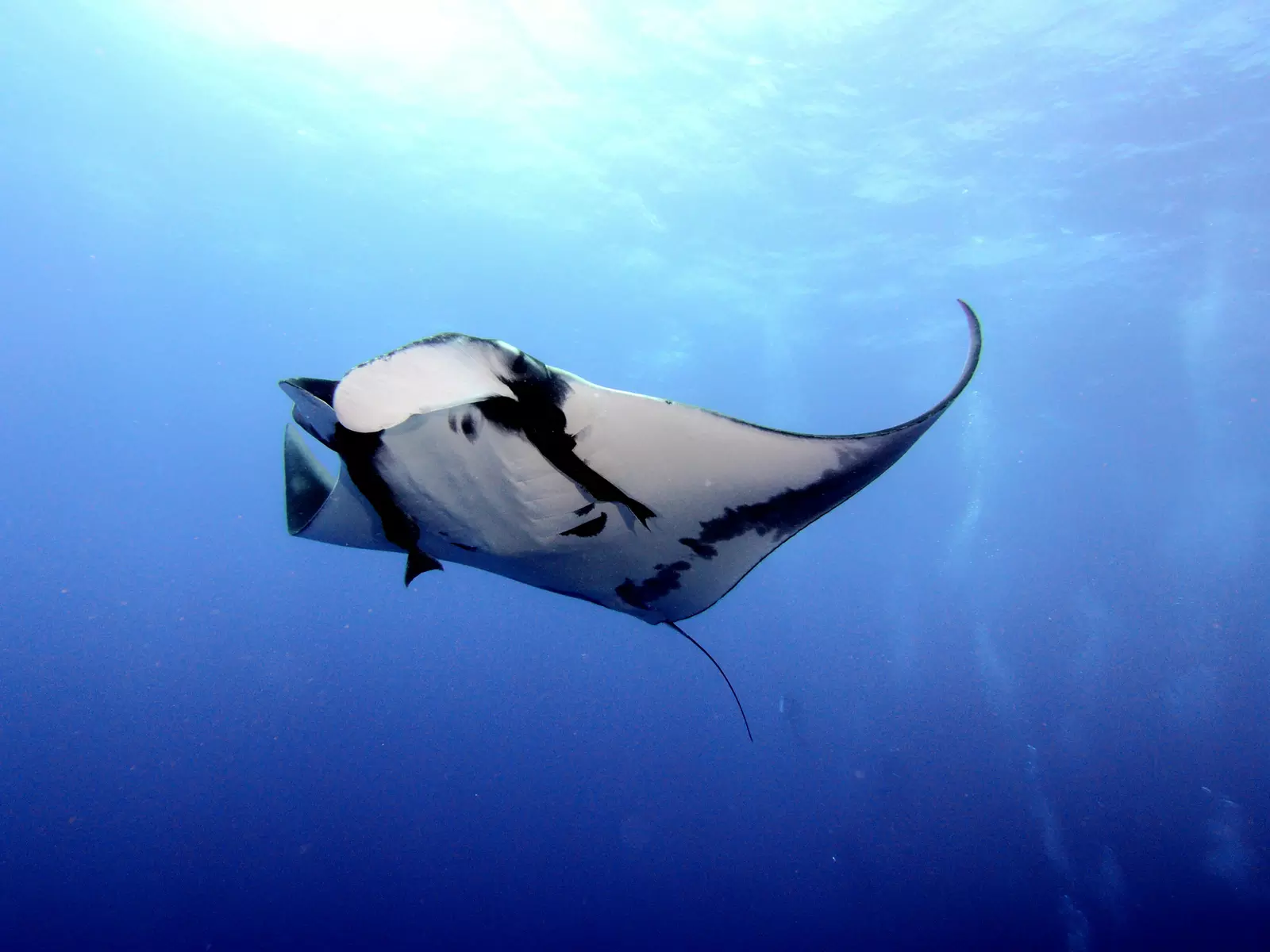
There's no swimming to do, no depth to manage and nothing to be brave about once the first manta comes through. You hold a board and float, and animals the size of a car do backward somersaults beneath you with their mouths open. They have no stinger and no biting teeth, which is usually the sentence that settles a nervous parent and an excited child at the same time.
Before you book
Check which night to choose, read the FAQ, or see what it costs.