1. Which harbour, and how long the ride is
This is the single biggest practical difference, and the one most listings bury.
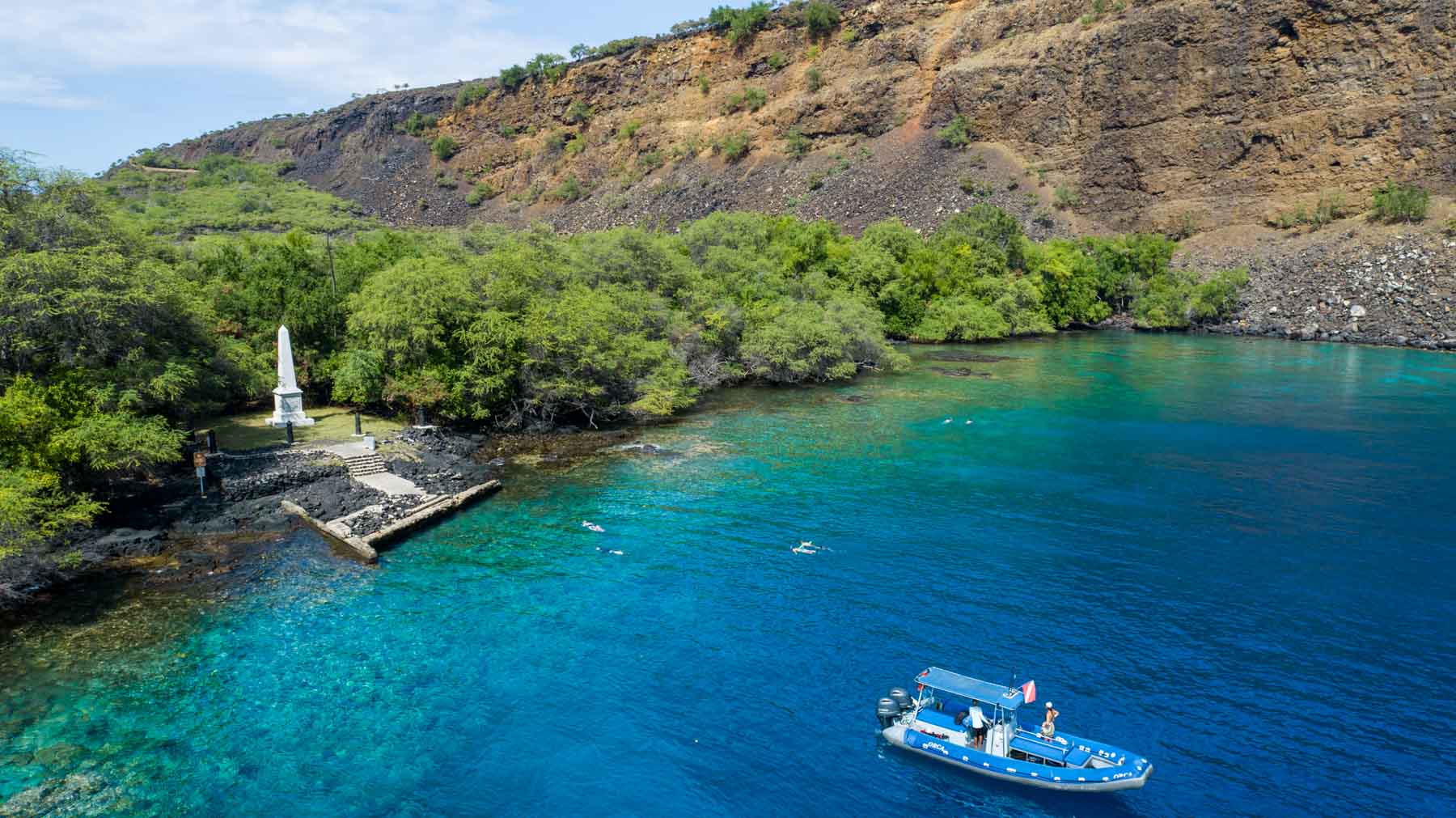
Kona has two main night manta sites. Manta Village sits off Keauhou Bay, south of Kailua-Kona. Manta Heaven sits up the coast at Garden Eel Cove near the airport, usually reached from Honokōhau Harbor. Boats leaving from the northern harbours typically run 25–40 minutes each way to reach a site; boats leaving from Keauhou are over Manta Village in about three minutes.
That is roughly an hour of your evening, and on a night with any swell it is the difference between a short hop and a long wet ride. We depart from the harbour beside the Outrigger at Keauhou, which is why our ride is three minutes. More on the two sites.
2. Group size
Ask for the maximum, not the typical. Boats in Kona range from small six-packs up to vessels carrying forty or more. Group size changes how much space you have on the light board, how quickly everyone gets in the water, and how long the briefing takes.
We cap at 17 guests. Smaller operations exist and are excellent; the ones worth avoiding are the large boats that quote a low price and then put thirty-plus people on one float.
3. Light power
Light is the entire mechanism — it concentrates plankton, and plankton is what the mantas come for. More light on the water generally means more feeding under your group. Operators quote lumen figures and they are not always comparable, so treat it as a rough signal rather than a specification. We run 300,000 lumens. Why light drives the whole thing.
4. Departure time
Most operators run a sunset departure and stop. Sunset is the most crowded slot of the evening — several boats, many lights, the most fins in the water.
Later departures are quieter and statistically better: fewer boats, fewer competing lights, and the mantas concentrate on the lights still burning. If seeing mantas is the priority rather than catching the sunset on the ride out, book late. We run slots through the evening for exactly this reason.
5. Snorkel, dive, or raft
Snorkellers float at the surface holding a lighted board. Divers kneel on the bottom at about 35 feet with lights pointed up. The animals feed in the column between the two, so neither is a worse seat — but diving needs certification and costs more. Some operators also run rigid-hull rafts rather than larger boats, which is a wetter, livelier ride. Full comparison.
6. The guarantee and the cancellation terms
Mantas are wild. Ask two questions before you book anywhere:
- What happens if no mantas show? Reputable operators offer a free re-ride. Check whether it is automatic or discretionary, and whether it applies to discounted tickets — a discounted ticket often requires paying the difference on the second trip.
- What is the refund window? Ours is 100% up to 72 hours ahead. Also ask what happens if the boat does not reach minimum capacity: most operators, ourselves included, move you to another time rather than refunding.
What does not matter as much as you think
Price. The spread across reputable Kona operators is narrow. A conspicuously cheap ticket usually means a bigger group or a longer commute, not a better deal.
Photo packages. Nice to have, not a reason to choose. You can rent a GoPro at check-in with most operators, ourselves included.
Review count alone. A long-established operator has more reviews because it has been trading longer, not necessarily because tonight will be better. Read the recent ones and look for comments about crowding and ride length.
A short checklist
- Which harbour, and how many minutes to the site?
- Maximum guests on the boat?
- How much light?
- What departure times, and how late do they run?
- What exactly happens if no mantas show?
- Refund window, and the minimum-capacity policy?
Any operator worth booking will answer all six without hedging.
Next
See whether the tour is worth it at all, what ours costs and includes, or the full tour details.