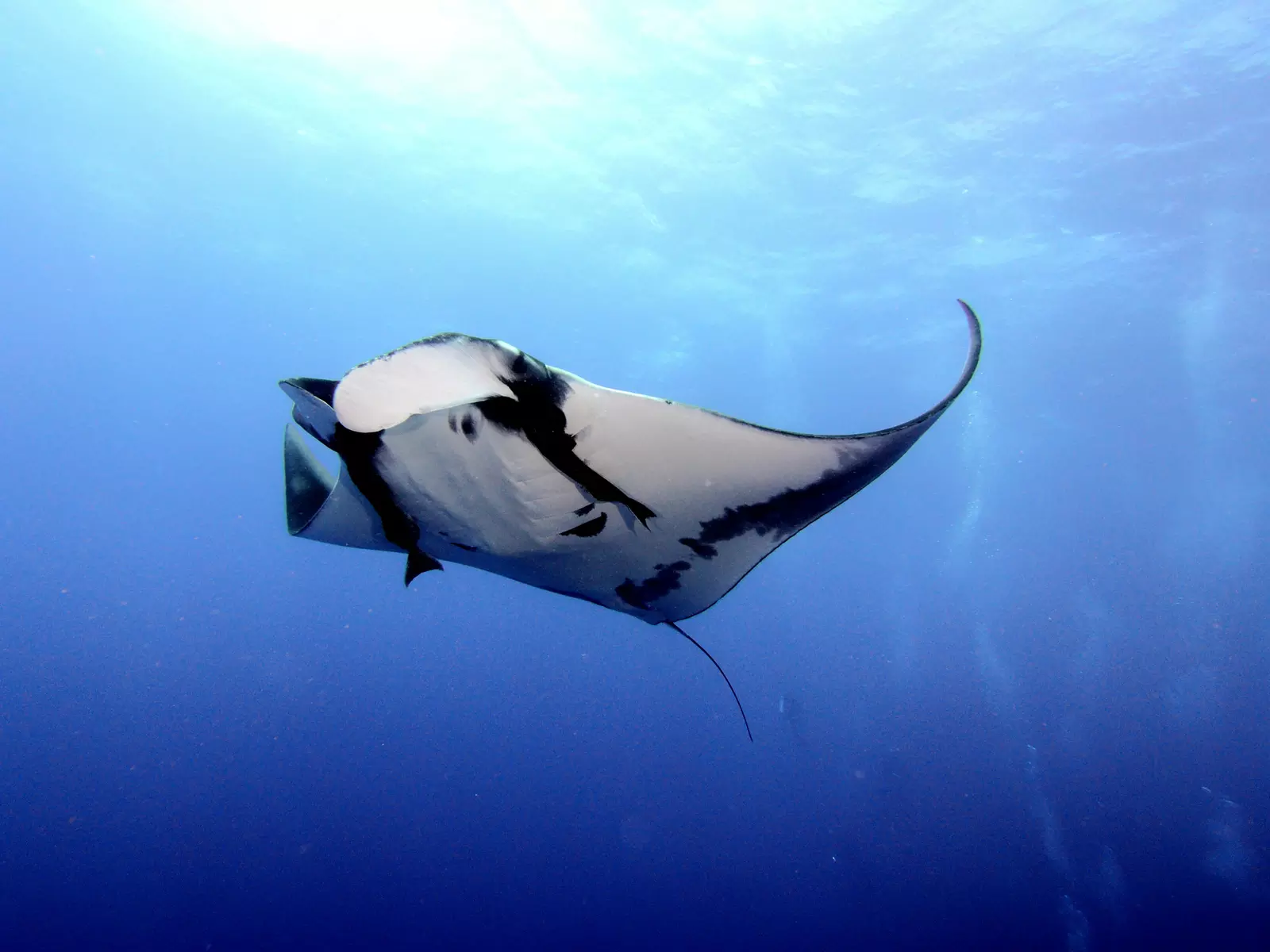
There is no manta season
Unlike whales, Kona’s reef mantas never leave. The same individuals feed at the same sites year-round, so any month you visit is manta month.
What varies is the ocean, not the animals. Summer generally brings the calmest water; winter can bring more swell and the occasional canceled night — another reason to book early in your trip (more below). Winter visitors get a bonus: humpback whales pass the Kona coast roughly December through April, and you may hear them singing through the water while you float.
Book the first night of your trip, not the last
The one scheduling rule locals give visitors: don’t save the manta snorkel for your final evening. Ocean conditions occasionally cancel a night, and mantas are wild animals. Go early in your stay — if the night is blown out or the mantas are slow, you have time to come back. Our sightings guarantee* works the same way: if the mantas don’t show, you can ride again.
Early tour or late tour?
Sunset departures show you the coast in golden light and get the kids to bed on time. Later departures — which we run further into the night than any other boat — find quieter water: fewer boats, fewer lights competing for the plankton, and the feeding concentrated where the lights still shine. If mantas are your priority, take the late boat. Why the night works.
What about the moon?
Manta nights happen in every moon phase. Around the new moon the water is darker, which can make the dive-light beams more distinct and the plankton concentrate more tightly in them. Around the full moon you get a beautiful lit ocean on the ride out. Neither cancels the other out — plankton, not moonlight, is what brings the mantas in.
Month by month, at a glance
- May–September — calmest seas, warmest water, easiest conditions for first-time snorkelers
- December–April — manta nights plus humpback whales along the coast
- Every month — resident mantas, nightly feeding, no season to miss
Ready when you are
Meet the mantas, read the FAQ, or book the Moonlight Manta Snorkel.