The stingray confusion
Almost everyone who asks this question is thinking of a stingray. The two animals are related, but the differences are the ones that matter.
A stingray has a barbed, venomous spine near the base of its tail, and it uses that barb defensively when stepped on in shallow water. A manta ray has no barb at all. Its tail is a thin, flexible whip with nothing on the end of it. There is no venom and no mechanism to deliver any.
Mantas also have no biting teeth. They feed by swimming open-mouthed through clouds of plankton and straining the water through gill plates, the same way a baleen whale does. A manta's mouth can be three feet wide and still poses no threat to anything larger than a shrimp larva.
How close do they actually get?
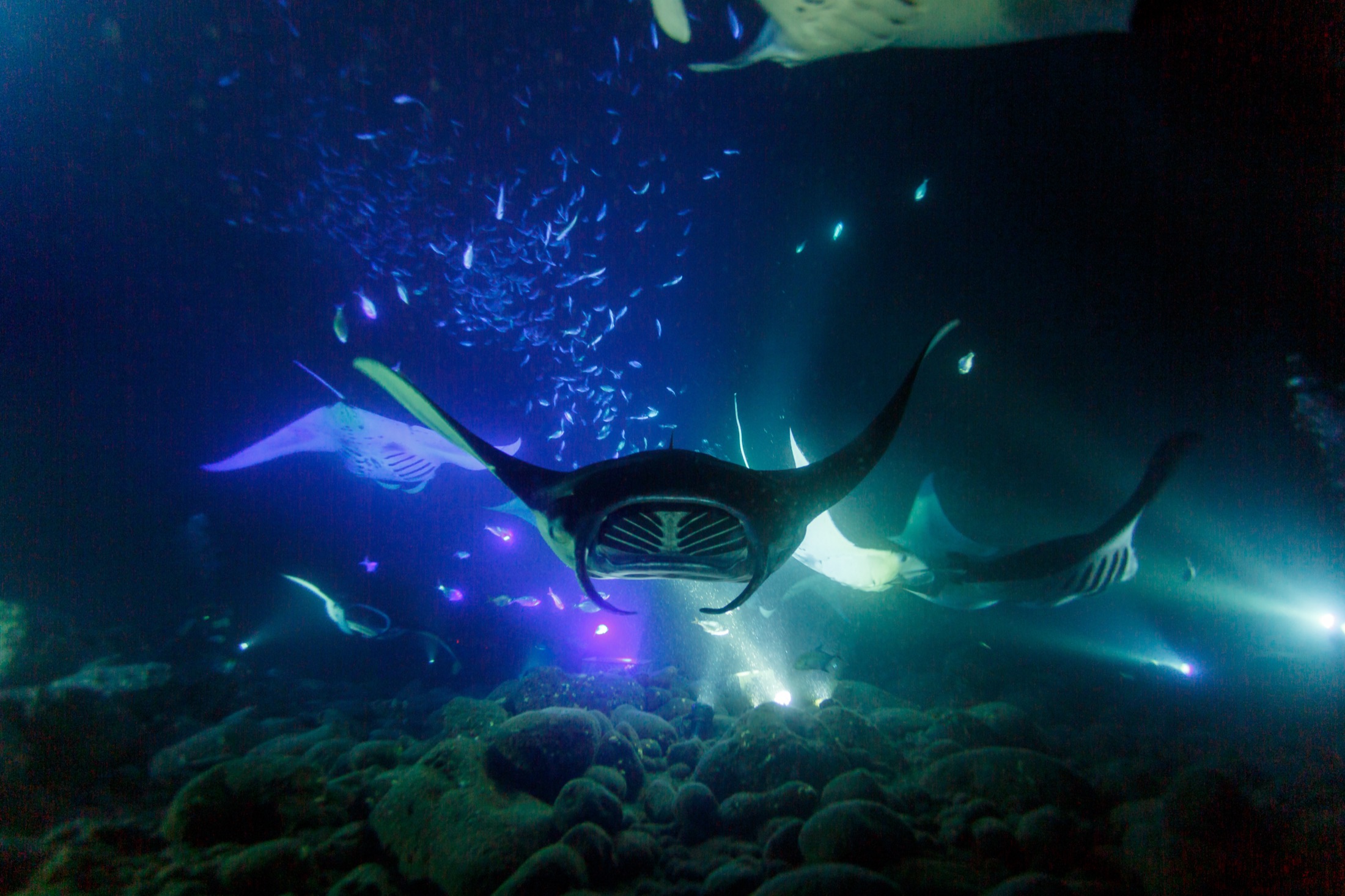
Close. On a good night in Kona, mantas barrel-roll through the lit water directly beneath the group, sometimes passing within inches of a mask. Guests regularly feel the push of water from a passing wing.
That proximity is the manta's choice, not yours. The animals come to the light because the light concentrates plankton. They are highly maneuverable and fully aware of where every snorkeler is, and they steer around people with a precision that is startling to watch. More about the resident mantas of the Kona coast.
So what are the real risks?
The honest answer is that the manta rays are the safest part of the evening. The genuine considerations are ordinary ocean ones:
- Comfort in open water. This is the real ocean at night, not a pool. You need to be a confident swimmer who is comfortable putting your face in the water in the dark.
- Cold. Kona water runs roughly 75–81°F year-round. Wetsuits are provided and keep most guests comfortable for the full float.
- Seasickness. Unlikely on our tour — the ride is about three minutes each way and the tour itself is spent floating, not sitting on a rocking deck.
- Sunscreen and chemicals. Wear reef-safe sunscreen earlier in the day and rinse before entering. Lotions and oils wash off into the feeding site.
Every guest gets a briefing before entering the water, and guides stay with the group from the first splash to the last ladder. Flotation is provided and you never need to leave the surface.
The rules exist to protect the mantas
Hawaii's manta viewing standards are built around the animals' welfare, not swimmer safety — which tells you something about where the risk actually sits.
- Do not touch. A manta's skin carries a protective mucus coating. Hands strip it away and leave the animal open to infection. Mantas are federally and internationally protected; touching is prohibited.
- Float flat and still. Hold the light board, stay horizontal at the surface, and let the mantas come to you.
- No diving down. Snorkelers stay on the surface. Divers stay on the bottom. The water between belongs to the mantas.
- Keep fins still and at the surface. Kicking into the feeding column pushes animals away and can injure them.
Who should sit this one out
The tour is not suitable for everyone. Guests must be able to swim confidently, snorkel independently, and climb a boat ladder without assistance, and must weigh under 300 lbs. It is not suitable for anyone with back, neck or mobility issues, or anyone uncomfortable in open water. If you are unsure of your swimming ability, this is not the tour to find out on.
Next steps
Read the full FAQ, see how the tour works with children, or check what to bring before you go.