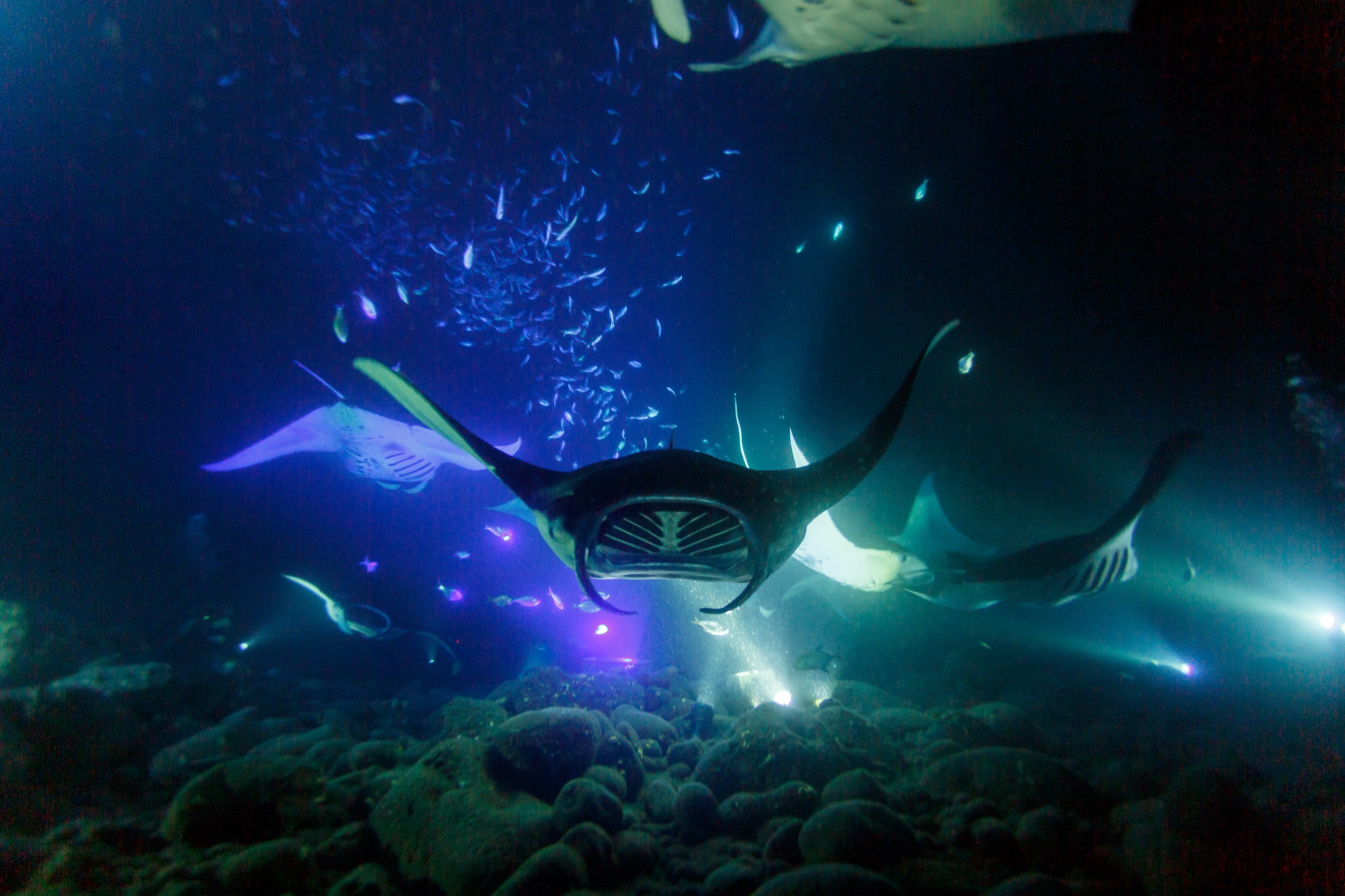
Are manta rays dangerous?
No. Manta rays have no stinger, no barb, and no teeth that can bite. They are filter feeders — plankton is the entire menu. You float at the surface; they feed below. The only rule is theirs to keep, and ours to follow: look, don’t touch.
Do I need to know how to swim?
You should be comfortable in the water, but you never leave the surface. You hold a flotation board the whole time, wetsuits add buoyancy, and life jackets are available. Guides stay with the group from the first splash to the last ladder.
What if the mantas don’t show up?
Mantas are wild animals, so no single night is scripted — that’s why sightings are guaranteed per our policy & terms: if the mantas don’t appear on your tour, you can come again. It’s also why we recommend booking early in your trip.
How long is the boat ride?
About three minutes. We depart from the harbor by the Outrigger Resort, right beside the feeding site known as Manta Village. Most other operators ride 30 minutes each way from another harbor — an hour of your evening spent commuting.
Can kids come?
Yes — kids who are comfortable in the water are welcome, and non-snorkelers can ride along and watch the lights from the boat. Everyone in the water floats together on the board with a guide.
What should I bring?
- Swimsuit (wear it under your clothes to check-in)
- Towel and a warm layer for the ride back
- Waterproof phone case if you want photos
Wetsuits, snorkel gear, and flotation are provided. Prescription masks are not available — rent one from Snorkel Bobs or Boss Frog if you need one.
Is the water cold at night?
Kona water runs roughly 75–81°F across the year, and the wetsuit keeps most guests comfortable for the whole float. The chill people remember is the boat ride back — that’s what the towel and dry layer are for.
Will I get seasick?
Unlikely. The ride is three minutes each way in near-shore water, and the tour itself is spent floating, not sitting on a rocking deck. If you’re very motion-sensitive, take your usual remedy before check-in and you’ll almost certainly be fine.
Still curious?
Read the complete Kona manta guide, see why the snorkel happens at night, or email us at info@hawaiimantaray.com.