Light makes the food chain
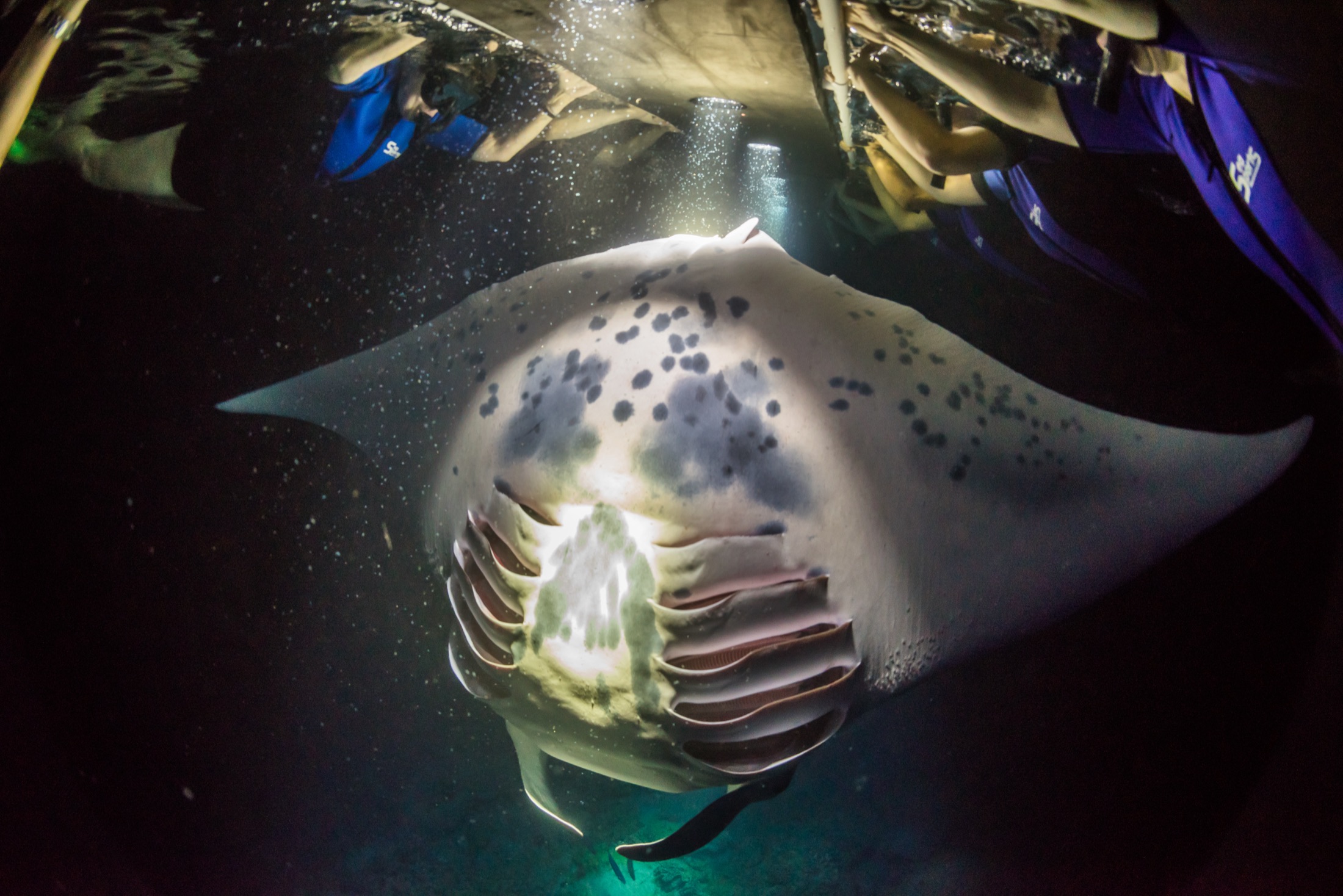
At night, dive lights shining up from the bottom and down from the surface act like a porch light for the ocean: plankton swarms toward the glow.
Manta rays are filter feeders, and a dense column of plankton in a light beam is the easiest meal on the coast. The mantas glide into the lit water and barrel-roll through it — backward somersaults with mouths wide open — often right beneath the snorkelers floating at the surface. The thicker the plankton, the longer they stay.
More light, more mantas
Because the plankton follows the light, light power matters. We run 300,000 lumens of dive light — more than any other boat at the site — which statistically attracts more plankton and gives mantas more reason to feed under our group. They are wild animals and no night is scripted; that’s exactly why we back the tour with a sightings guarantee.*
Later departures, quieter water
Most operators run at sunset and leave. We offer the latest departures at the site — after the early boats head in, the water gets quieter, the lights get fewer, and the mantas that are feeding concentrate on the lights still on. Later tours often mean more mantas, more time with them, and fewer fins in the water. We run the early times too, if that fits your evening better.
What the night snorkel actually feels like
- A three-minute boat ride from the harbor by the Outrigger Resort to the manta site
- A briefing on the way: how to float, where the lights go, what the mantas will do
- In the water, you hold a light board and float flat on the surface — no swimming skill needed, flotation provided
- Below you: the beam, the plankton, and mantas looping through inches away
Water this close to shore stays calm most nights, and the short ride means almost no time for seasickness. Wetsuits keep you comfortable for the whole float.
Plan your night
Learn about the mantas themselves, check the best time to go, or book the Moonlight Manta Snorkel.