The short answer
If you are not already a certified diver, snorkel. The surface view is the iconic one, it needs no certification, and the mantas come to the light regardless of which side of them you are on.
How the site works
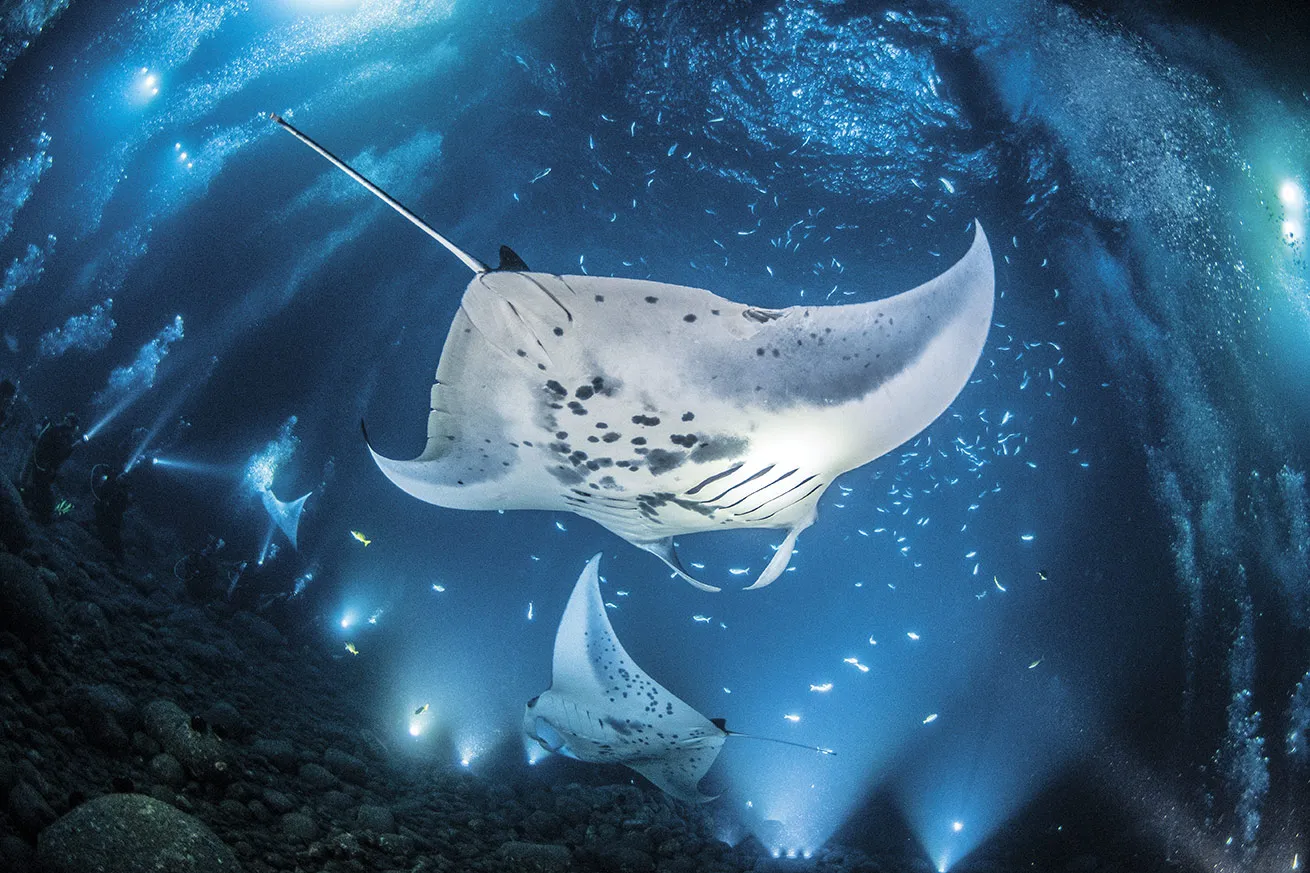
At the Kona manta sites, light is the whole mechanism. Divers kneel on the bottom with lights pointed up; snorkelers float at the surface holding a lighted board pointed down. Plankton swarms into the lit water between them, and the mantas loop through that column to feed. More on why the night works this way.
That means the animals pass between the two groups. Neither position is a consolation prize.
Snorkeling: the surface view
You float face-down on the surface holding the board, with a flotation belt keeping you flat and effortless. The mantas barrel-roll up toward the light and peel away inches beneath your mask. Looking down into a lit column of water with a twelve-foot animal rising at you is the image most people have in their heads when they picture this tour.
- No certification required
- No equipment skill beyond breathing through a snorkel
- You never leave the surface — flotation provided
- Guides stay with the group the whole time
- Works for families; children are welcome with an adult
- Shorter, warmer, cheaper than diving
The trade-off is that you are looking down through moving surface water, and you stay in one position at the board.
Diving: the bottom view
Divers settle on the sand at roughly 35 feet, set lights facing up, and stay put. The mantas pass overhead, sometimes close enough to brush a tank. You get a longer bottom time, a stiller platform, and a view up into the plankton column with the surface light behind the animals.
- Open Water certification required, and night-diving comfort strongly recommended
- More gear, more briefing, more cost
- Longer time in the water
- Steadier shooting platform if you are serious about photography
The trade-off is cost, certification, and that a night dive is a genuinely more demanding activity.
Which should you choose?
- First time seeing mantas? Snorkel. It is the lower-friction way into the same encounter.
- Travelling with kids or non-divers? Snorkel — everyone goes together.
- Nervous in water? Snorkel, with a wetsuit and a life jacket. You hold a board the entire time.
- Certified, current, and comfortable at night? Dive, if you want the longer bottom time.
- Serious underwater photographer? Dive for the stability — though plenty of the best manta images are shot from the surface.
What doesn't change
The rules are identical either way, and they exist for the animals: look but don't touch, keep lights pointed into the column rather than at the mantas, and never chase. Snorkelers stay at the surface, divers stay on the bottom, and the water in between belongs to the mantas. More on safety and the viewing standards.
Sightings are not guaranteed by nature either way — which is why we back the snorkel with a guarantee: no mantas, come again.
What we run
We run the Moonlight Manta Snorkel — the surface experience, with a three-minute boat ride from the harbor, a maximum of 17 guests, and 300,000 lumens of light on the water. If you are set on diving, book with a dive operator; if you want the surface view tonight, we have both early and late departures.